
CNC Machining for Composite Panels: Cutting, Routing and Embedded Reinforcements
What Is CNC Machining for Composite Panels?
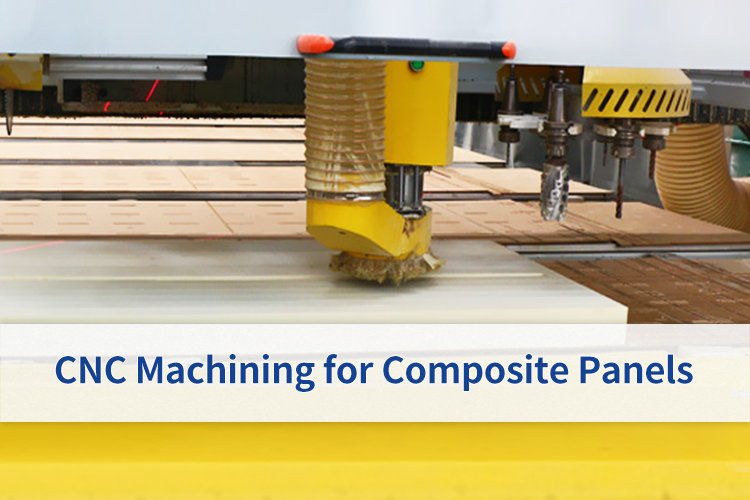
CNC (Computer Numerical Control) machining for composite panels is a precision manufacturing process that uses computer-controlled equipment to cut, mill, drill, and shape composite materials based on digital design specifications. This process transforms standard composite panels into customized components featuring specific dimensions, openings, grooves, mounting holes, and structural characteristics.
Unlike manual processing, CNC machining follows pre-programmed toolpaths generated from CAD drawings. This ensures dimensional consistency across multiple workpieces, guarantees repeatable quality, and enables the creation of complex geometric shapes.
When working with composite sandwich panels, CNC machining must account for both the outer skins and the internal core material. Materials such as fiber-reinforced plastic (FRP), continuous fiber-reinforced thermoplastics (CFRT), PET foam, XPS foam, PU foam, and polypropylene (PP) honeycomb each possess unique machining properties. Selecting the appropriate cutting tools, machining parameters, and workpiece support methods is essential to prevent issues such as fiber fraying, core crushing, delamination, and surface damage.
Common CNC Machining Processes for Composite Panels
· CNC Cutting
CNC (Computer Numerical Control) cutting technology enables the processing of composite panels into precise dimensions and shapes based on customer-provided drawings and design specifications. This process supports straight-line cutting, contour cutting, and custom-sized trimming, and is widely used in applications such as truck bodies, recreational vehicles (RVs), trailers, and industrial enclosures. By using computer-controlled cutting paths, manufacturers can ensure consistent dimensions across multiple panels and achieve highly accurate edge finishes.
· CNC Routing and Milling
CNC milling and cutting processes can be used to machine grooves, recesses, cavities, and complex geometric shapes into composite material sheets, in accordance with your design specifications. These techniques allow us to create precise channels for embedded reinforcements, designate mounting areas for hardware, and incorporate custom features for structural assembly. By selecting the appropriate cutting tools and machining parameters, manufacturers can ensure clean edges, consistent dimensions, and reliable assembly between components.
· Drilling and Hole Machining
Drilling and hole machining processes allow for the precise creation of openings in composite panels, facilitating the installation of hardware, hinges, fasteners, brackets, and other assembly components. CNC drilling ensures consistent hole diameters and precise positioning in accordance with engineering drawings. Before machining, hole locations and edge distances must be carefully verified to prevent cracking, delamination, or localized damage around the openings. Proper drilling procedures improve component alignment accuracy, streamline the installation process, and ensure secure connections within truck bodies, recreational vehicles (RVs), trailers, and other structures built from composite materials.
· Edge Finishing and Surface Preparation
When performing CNC machining on composite panels, edge finishing and surface preparation are critical steps. These processes not only enhance edge quality but also ready the material for subsequent bonding, sealing, and assembly operations. Following cutting or milling, the edges of a workpiece typically require deburring, trimming, and cleaning to remove loose fibers, dust, and other imperfections. In the case of composite sandwich panels, proper edge treatment also serves to protect the exposed core material, preventing moisture ingress or other forms of damage.
Embedded Reinforcements in Composite Panels
· Common Embedded Reinforcement Materials
Commonly used embedded reinforcements in composite panels include steel pipes, aluminum profiles, and fiber-reinforced plastic (FRP) profiles. Aluminum profiles offer an excellent strength-to-weight ratio and good corrosion resistance. Steel inserts provide high strength and rigidity for heavy-duty mounting points, hinges, locks, and load-bearing connections, though they have relatively poor corrosion resistance. FRP profiles are not only corrosion-resistant but also highly compatible with composite structures; in certain applications, they can even help reduce the thermal bridging effect.
· CNC Machining for Embedded Components
– Routing cavities and reinforcement channels
– Positioning and dimensional control
– Bonding, encapsulation, and interface design
How CNC Machining Improves Composite Panel Assembly
· Accurate component alignment and repeatable production
CNC machining ensures that composite panels are manufactured in strict accordance with precise dimensions and engineering drawings. Mounting holes, grooves, cutouts, and connection points are positioned with high accuracy, guaranteeing that all components fit together perfectly during assembly. Furthermore, this computer-controlled machining process enhances consistency across different production batches, helping to maintain stable product quality.
· Reduced manual trimming and assembly rework
Precisely machined panels require minimal manual adjustment during installation. Accurate cutting, drilling, and milling effectively reduce issues such as dimensional inaccuracies, misaligned holes, and poor edge fit, thereby minimizing the need for additional trimming, drilling, or modifications during the assembly phase. By reducing rework and material waste, CNC machining not only enhances production efficiency and shortens assembly cycles but also lowers overall manufacturing costs.
· Integration of machining and embedded reinforcement
CNC machining enables manufacturers to create cavities, grooves, and channels for embedded reinforcement components — such as aluminum tubes, steel inserts, and fiberglass profiles. These structural features ensure that the reinforcements can be precisely positioned within composite sandwich panels to meet specific structural and connection requirements.
· Improved consistency for customized panel kits
In custom manufacturing projects, each panel is processed according to a digital design, incorporating specific cutouts, mounting holes, grooves, and designated locations for reinforcement components. This consistency in processing streamlines inventory management, component identification, transportation, and final assembly, enabling manufacturers to deliver customized solutions more efficiently.
How to Choose a CNC Machining Partner for Composite Panels
Experience in Composite Material Fabrication
You should select a manufacturer with extensive experience in producing composite panels. Since different composite materials possess unique processing characteristics, improper handling can easily damage the panels. Furthermore, experience in sectors such as truck bodies, RVs, trailers, or industrial applications is a significant advantage, as it ensures that the fabricated components meet specific structural and assembly requirements. At Composite-Box, for instance, we bring over a decade of experience in composite panel manufacturing.
Professional CNC Capabilities
Specialized CNC (Computer Numerical Control) equipment is essential for ensuring dimensional precision, clean edges, and consistent production quality. When evaluating a supplier, assess their capabilities in cutting, milling, grooving, and drilling, and confirm the maximum panel dimensions and thickness ranges they can handle. Composite-Box’s advanced CNC equipment allows for the precise machining of complex contours, mounting holes, grooves, and reinforced cavities based on engineering drawings.
Rigorous Quality Control and Production Processes
Composite-Box implements strict quality control throughout the entire manufacturing process—from the inspection of incoming raw materials to the final verification of dimensions. Standardized inspection procedures and production workflows help minimize defects, ensuring that the finished products meet all client technical specifications. For large-volume orders, buyers may also request samples or quality inspection reports.
Customization, Lead Times, and Export Packaging
For OEM projects, an ideal manufacturer should offer flexible customization based on technical drawings, CAD files, material specifications, and specific application requirements. This may include custom panel sizing, CNC cutting, grooving, and drilling, as well as the integration of reinforcements such as aluminum, steel, or fiberglass-reinforced plastic (FRP). Before placing an order, clarify lead times, minimum order quantities (MOQs), sample availability, and the communication process for handling design changes. Export packaging is also critical, especially for large or fragile composite panels. The use of protective wrapping, edge guards, moisture-resistant packaging, and secure palletization helps minimize the risk of damage during international transit.




 English
 French
 German
 Japanese
 Korean
 Russian
 Polish
 Spanish