
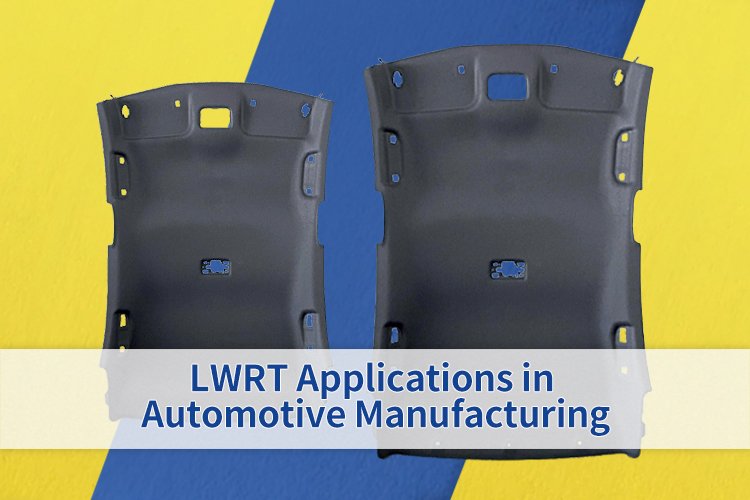
LWRT Applications in Automotive Manufacturing: Lightweight Solutions for Modern Vehicles
Introduction
As the automotive industry continues to focus on lightweighting, energy efficiency, and passenger comfort, advanced composite materials are becoming increasingly important. LWRT (Lightweight Reinforced Thermoplastic) is one such material, widely used in automotive interior components, acoustic insulation systems, and lightweight structural panels.
Typically made from thermoplastic polymers such as polypropylene (PP) reinforced with glass fibers, LWRT combines low weight, good stiffness, sound absorption, and excellent thermoforming capabilities. These properties make it suitable for manufacturing various automotive components while helping reduce overall vehicle weight.
1. Key Advantages of LWRT in Automotive Manufacturing
LWRT offers several advantages that meet the evolving requirements of automotive manufacturers.
- Lightweight Construction: Its low-density fiber structure helps reduce component weight, contributing to improved fuel efficiency and extended electric vehicle range.
- Sound Absorption: Its porous structure effectively absorbs sound waves, helping reduce road noise, engine noise, and vibrations inside the cabin.
- Thermal Insulation: LWRT can provide thermal insulation in selected automotive applications, improving passenger comfort.
- Thermoforming Flexibility: It can be heated and molded into different shapes, making it suitable for complex automotive components.
- Material Versatility: LWRT can be combined with decorative fabrics, nonwoven materials, films, and other functional layers to meet different design requirements.
- Recyclability: PP-based LWRT materials offer recycling potential and can support more sustainable automotive manufacturing.
2. Common Automotive Applications of LWRT
LWRT is primarily used in automotive interior and acoustic components, as well as selected protective panels.
Automotive Headliners
Headliners are one of the most common applications of LWRT. Installed on the interior roof of a vehicle, these panels provide a finished appearance while helping absorb cabin noise and improve thermal comfort. LWRT offers a lightweight substrate that can be laminated with decorative fabrics or other surface materials.
Door Trim Panels
LWRT can be used as a substrate for automotive door panels. Its lightweight structure and formability allow manufacturers to produce complex shapes while maintaining sufficient stiffness. It can also be integrated with decorative and acoustic layers.
Trunk Floors and Rear Parcel Shelves
Cargo floors and rear parcel shelves require a balance of weight, rigidity, and dimensional stability. LWRT can be thermoformed into lightweight panels that support everyday storage needs while helping reduce vehicle weight.
Wheel Arch Liners
Wheel arch liners protect vehicle body structures from water, mud, and road debris. LWRT-based solutions can also help absorb tire noise and reduce sound transmission into the passenger compartment, provided the material is designed for the required environmental conditions.
Underbody Shields
LWRT can be considered for selected underbody covering applications. Its lightweight construction and molding flexibility support aerodynamic panel designs. However, resistance to moisture, stone impact, temperature, and environmental exposure must be carefully evaluated.
Pillar Trims and Acoustic Components
LWRT can also be used in selected A/B/C pillar trim substrates and engine compartment acoustic components. Its sound absorption and lightweight properties make it useful for improving vehicle interior comfort.
3. LWRT Manufacturing and Thermoforming Process
The manufacturing of LWRT automotive components generally involves several stages.
First, thermoplastic polymers and reinforcing fibers, such as glass fibers, are selected according to the required mechanical and acoustic properties. The fibers are then distributed and combined with the polymer to form a lightweight nonwoven mat.
Next, the material is heated and transferred into a forming mold. Under controlled temperature and pressure, the LWRT sheet takes the required shape. After cooling, the formed component undergoes trimming, cutting, and dimensional inspection.
Additional processes, including CNC machining, surface lamination, and edge finishing, can be used to meet specific automotive design and assembly requirements.
4. Factors to Consider When Selecting LWRT
Choosing the right LWRT material depends on the intended automotive application. Important considerations include:
- Density and Thickness: These affect component weight, stiffness, and acoustic performance.
- Fiber Content: Different reinforcement levels provide different mechanical properties.
- Mechanical Strength: Flexural strength and dimensional stability should match the component’s requirements.
- Acoustic Performance: Sound absorption requirements vary between headliners, door panels, and other interior components.
- Environmental Resistance: Temperature, humidity, moisture, and aging resistance must be considered.
- Surface Compatibility: Lamination and finishing options should meet the vehicle’s interior design requirements.
For automotive applications, material selection should be supported by relevant testing and validation to ensure long-term performance and compliance with applicable standards.
5. Future Prospects of LWRT in the Automotive Industry
- With the rapid development of electric vehicles and increasing demand for sustainable materials, LWRT has promising application potential. Electric vehicles place greater emphasis on lightweight construction and cabin noise control, creating opportunities for lightweight acoustic composite materials.
- Meanwhile, advances in thermoforming, material integration, and recycled thermoplastic technologies are expanding the possibilities for customized automotive components.
Conclusion
- LWRT is a versatile material for automotive lightweighting, interior manufacturing, and acoustic management. From headliners and door trim panels to trunk floors and wheel arch liners, it offers manufacturers a combination of low weight, formability, and functional performance.
- As automotive designs continue to evolve, customized LWRT solutions can help component manufacturers develop lighter, more efficient, and more comfortable vehicles.




 English
 French
 German
 Japanese
 Korean
 Russian
 Polish
 Spanish