
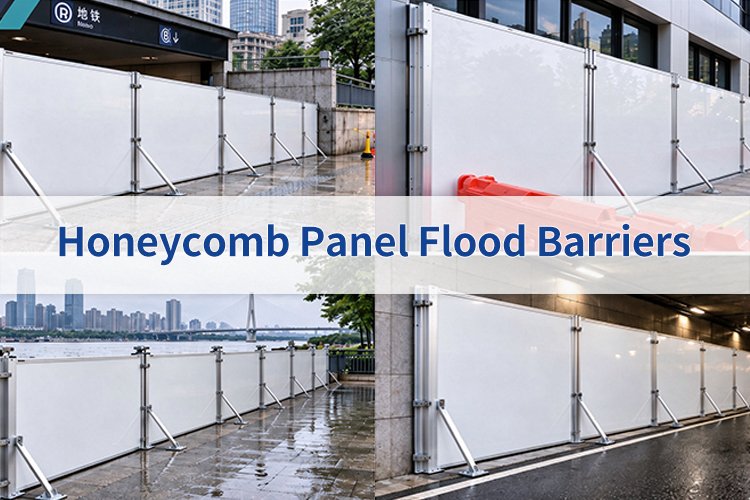
Honeycomb Panel Flood Barriers: Design, Advantages, and Applications in Flood Defense
Flooding is one of the most common natural disasters affecting residential, commercial, and industrial areas. With the increasing frequency of extreme weather events and heavy rainfall, there is a growing market demand for reliable, reusable flood defense systems. Traditional flood barriers—typically constructed from solid metal, concrete, or heavy-duty plastic—often present significant challenges in terms of transportation, installation, and storage.
Honeycomb panel flood barriers offer an ideal alternative, combining a lightweight design with high structural strength. These systems utilize a “sandwich panel” construction—consisting of a honeycomb core bonded between durable outer skins—providing an effective solution for manufacturers and engineering firms developing modern flood defense systems.
1. What are honeycomb panel flood barriers?
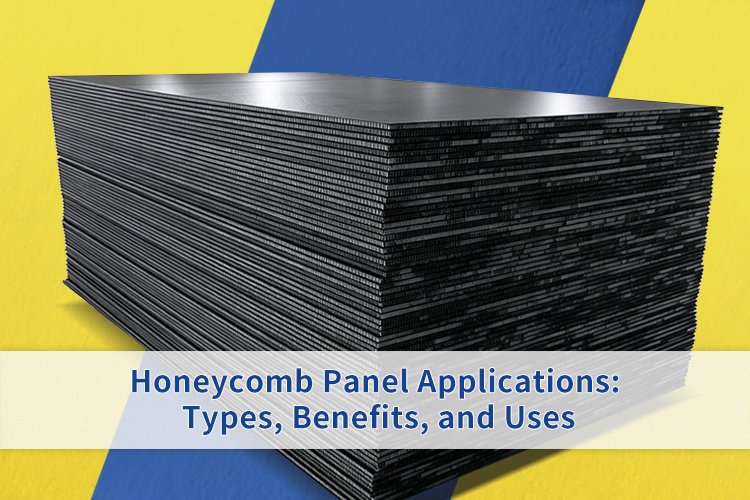
Honeycomb panel flood barriers are protective structures constructed using honeycomb sandwich panels. These panels typically consist of two outer skins bonded to a lightweight honeycomb core, forming a rigid and stable composite structure.
The honeycomb core contains a series of interconnected grid cells, resembling a natural honeycomb. This geometric configuration allows loads to be distributed evenly across the entire panel, while minimizing material usage and reducing overall weight.
Depending on performance requirements, the outer skins can be made from materials such as fiberglass-reinforced plastic (FRP), aluminum, steel, or other composites, while the core is commonly composed of polypropylene (PP) or aluminum honeycomb.
In flood control applications, these panels—combined with integrated sealing systems, support frames, locking mechanisms, and reinforced edges—form a complete flood barrier system.
2. Why choose honeycomb panels for flood barriers?
· Lightweight and easy to handle
One of the primary advantages of honeycomb sandwich panels is their exceptional strength-to-weight ratio. Compared to many solid metal or concrete alternatives, honeycomb panels significantly reduce the weight of flood control components.
This makes transportation, manual handling, installation, and dismantling much more efficient—a crucial feature for temporary flood barrier systems that must be deployed rapidly in response to heavy rainfall or rising water levels.
· High structural rigidity
This sandwich construction offers greater flexural rigidity than a single-layer sheet of the same material. The outer skins and the honeycomb core work in tandem to resist bending deformation and distribute external loads. With proper design—optimizing panel thickness, core density, skin materials, and support spacing—this structural configuration ensures that the flood barriers remain stable and retain their shape under water pressure.
· Corrosion and moisture resistance
Because flood barriers are frequently exposed to water, damp environments, or outdoor conditions, the choice of materials is critical. The fiberglass-reinforced plastic (FRP) skin offers excellent corrosion resistance and will not rust like conventional steel. The polypropylene (PP) honeycomb core also features very low water absorption, making it highly suitable for use in damp or wet environments.
For outdoor installations, applying a UV-resistant surface treatment and properly sealing the panel edges can further enhance durability.
· Customizable Design
Honeycomb sandwich panels can be tailored to specific requirements in terms of thickness, dimensions, color, and material composition.
Manufacturers can flexibly select different core materials, skin thicknesses, and reinforcement structures based on required load-bearing capacities, installation conditions, and budget constraints.
Furthermore, processes such as CNC cutting, milling, edge reinforcement, and the integration of embedded components allow for the fulfillment of specific design requirements for various types of flood barriers.
3. Material Selection for Honeycomb Flood Barriers
The choice of materials directly determines the strength, durability, weight, and service life of a flood barrier.
- Fiberglass Reinforced Plastic (FRP) Facings: FRP offers excellent corrosion resistance, impact resistance, and superior outdoor durability, making it an ideal choice for composite flood barriers.
- Aluminum Facings: Aluminum is lightweight and rigid; with appropriate surface treatment, it exhibits good corrosion resistance.
- Steel Facings: Steel provides high mechanical strength, though it requires necessary anti-corrosion treatment for long-term use in humid environments.
- Polypropylene (PP) Honeycomb Core: A PP honeycomb core is lightweight and moisture-resistant, making it suitable for applications that require a balance between weight and structural performance.
- Aluminum Honeycomb Core: An aluminum honeycomb core offers high rigidity and low weight, making it well-suited for scenarios that demand high structural performance.
The optimal material combination depends on factors such as anticipated water pressure, barrier dimensions, support conditions, the operating environment, and specific project requirements.
4. Applications of Honeycomb-Panel Flood Barriers
Honeycomb composite panels can be utilized in various types of flood protection systems.
Residential Flood Protection: Lightweight honeycomb panels can be used for removable flood barriers for doorways, garage entrance guards, and other temporary flood defense measures.
Commercial Buildings: Modular flood barrier systems can be deployed at the entrances of retail stores, warehouses, offices, and underground parking facilities to reduce the risk of floodwater entering the premises.
Industrial Facilities: Factories, logistics centers, and storage facilities often require larger-scale flood protection structures. Reinforced honeycomb panels, designed and tested for specific load requirements, can be applied in these environments.
Temporary Flood Protection Systems: Portable and reusable flood barriers benefit from the lightweight nature of honeycomb panels, making them easier to transport, install, dismantle, and store.
5. Key Design Considerations for Flood Barrier Manufacturers
While honeycomb panels offer several structural advantages, selecting high-strength panels alone is not sufficient to create an effective flood barrier system.
Since water pressure increases with depth, flood barriers must be engineered based on the anticipated maximum flood level. Factors such as panel thickness, core material properties, support spacing, frame strength, and connection design all influence the overall performance of the system.
Other critical considerations include:
- Watertight Sealing: Systems should incorporate EPDM rubber or other suitable gasket materials to minimize leakage at panel edges and installation interfaces.
- Edge Reinforcement: Reinforcing the edges helps enhance connection strength and protects the honeycomb core material.
- Mechanical Connections: Bolts, locking mechanisms, and support frames must be designed to withstand the expected loads.
- Impact Resistance: Flood barriers should be designed to account for potential impacts from floating debris.
- Testing and Validation: Complete flood barrier systems should undergo structural strength and leakage testing under conditions that simulate real-world operational scenarios.
It should be noted that a honeycomb panel on its own does not constitute a complete flood protection or waterproofing system. Sealing, joint design, support structures, and installation quality are equally critical.
6. Customized Honeycomb Sandwich Panels from Composite-Box
Composite-Box specializes in the manufacturing of customized composite sandwich panels for a wide range of industrial applications. Leveraging our production capabilities, we offer the flexibility to combine various facing materials with lightweight core materials to meet the specific requirements of your project. For manufacturers of flood barriers and engineering firms, we provide the following products and services:
- A diverse selection of facing materials, including fiberglass-reinforced plastic (FRP), continuous fiber-reinforced thermoplastic (CFRT), aluminum, and more.
- Polypropylene (PP) honeycomb cores and other suitable lightweight core materials.
- Customizable panel thickness, dimensions, and density.
- CNC cutting, milling, and precision machining.
- Integrated reinforcement structures and custom structural components.
- Composite material combinations engineered to meet specific environmental and mechanical performance requirements.
Whether you are developing portable flood barriers, modular flood protection systems, or bespoke composite structures, selecting the right sandwich panel configuration is a crucial step toward achieving the desired performance.
Contact Composite-Box today to discuss your honeycomb panel requirements and develop a tailored composite solution for your flood protection project.
 English
 French
 German
 Japanese
 Korean
 Russian
 Polish
 Spanish