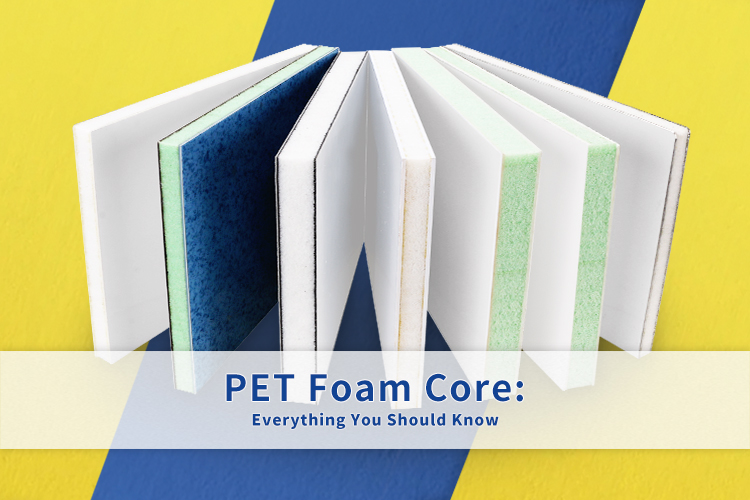
PET Foam Core: Everything You Should Know
What is PET foam?
PET Foam Core is made from polyethylene terephthalate, or PET polyester resin. It is a closed-cell thermoplastic foam.
It is a high-quality core material for composite structural sandwich panels. The common density is 80–200 kg/m³. PET foam has a wide range of uses; it can be used in truck bodies, railroads, ships, automobiles, wind power, construction, and other fields.
what are the advantages of PET foam?
PET foam core has a lot of advantages and is a recognized foam; the following are its advantages:
100% recyclable: PET foam can be recycled and reused. Residue and chips can also be recycled, helping to protect the environment.
High Temperature Resistance: PET foam can withstand processing temperatures of up to 150 °C (302 °F) during processing. Long-term use can reach 100 °C. It is more thermally stable than EPS and less likely to deform at high temperatures.
High safety: PET foam is non-toxic. It won’t expand or explode in high heat or fire. Also, it doesn’t release toxic gases, so it is very safe.
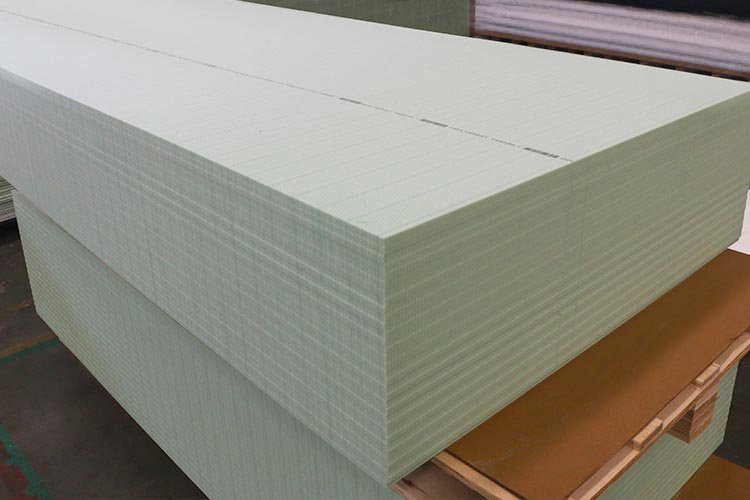
Easy to process: PET foam is suitable for most production methods; Composite Box can be processed into PET block, PET plain board, grooving board, PET foam strip, and so on. It is stable during processing and can be adapted to different appearance structures.
Homogeneous cellular structure: The extrusion process creates fine, uniform closed-cell foam. The pore size ranges from 0.01 to 1 mm. This foam has low thermal conductivity and strong mechanical strength. Very high strength-to-density ratio.
Other advantages: good fatigue strength, chemical stability, flame retardancy, high adhesive strength, and good UV resistance.
Density range: 80, 100, 115, 135, 150, 200 kg/m³
What are the applications of PET foam?
Many industries can use PET foam.
Dry freight truck body
It can be used for a dry freight truck body as a sandwich core.
It is a high-quality composite material, lightweight, and UV resistant.

Wind power industry
- Composite core
- Shells for wind turbine blades.
- Cut webs for wind turbine blades.
- Nacelle cover
Realizing the application of lightweight materials, promoting the development of new energy and new materials has long been driven by new energy.

architecture industry
- Architectural panels
- Soundproofing, insulation and decoration
- Doors, cabinets, windows, decking
Marine industry
- Used for the plywood of ships’ internal structure.
- Bulkheads for ships’ cabins
- Walls
- Ceiling
- Decoration and so on.
With lightweight, corrosion resistance, and good waterproof performance.
Rail Transit industry
- Railway Carriage Interior Panels
- Flooring Materials
- Seat and Cabin Padding
Aerospace industry
- Wings, Fuselages, and Flooring
- Engine Compartment and Cabin Soundproofing
- Cabin Interiors and Seating Materials
PET Foam Sandwich Panels
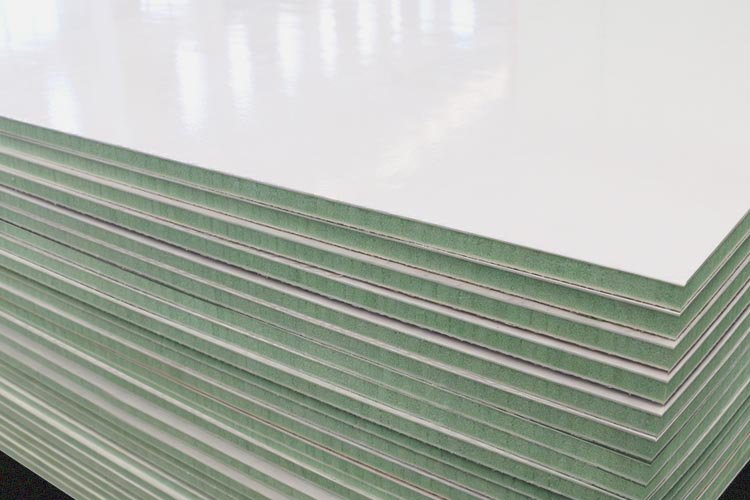
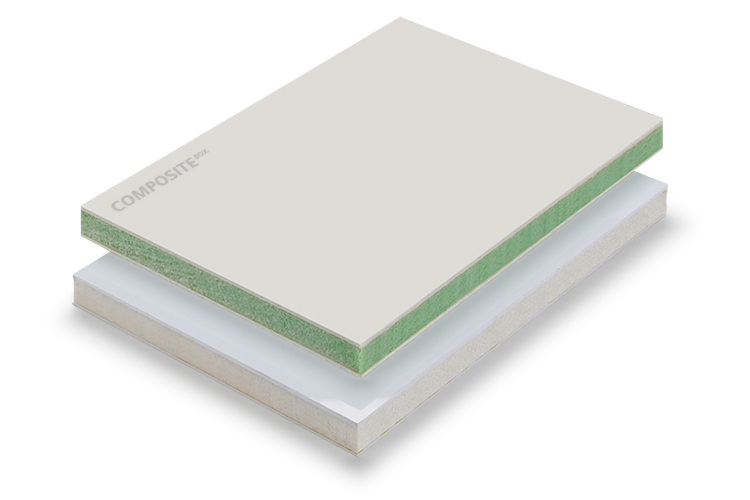
PET foam board is primarily used to produce PET foam panels, also known as PET sandwich panels. These panels are typically laminated with FRP skins, forming a high-performance composite material with a density ranging from 80 to 200 kg/m³. Characterized by impact resistance, high strength, and corrosion resistance, they are suitable for manufacturing RV and dry cargo truck bodies.
PET Sheet Processing Technology
Recycled PET laminating technology is primarily used for producing composite panels. This technology is essential for manufacturing FRP/aluminum/carbon fiber composite panels. We utilize these panels in constructing truck bodies, RVs, ships, and more. This technology is critically important for PET foam applications. Processing methods include thermoplastic and thermosetting techniques.

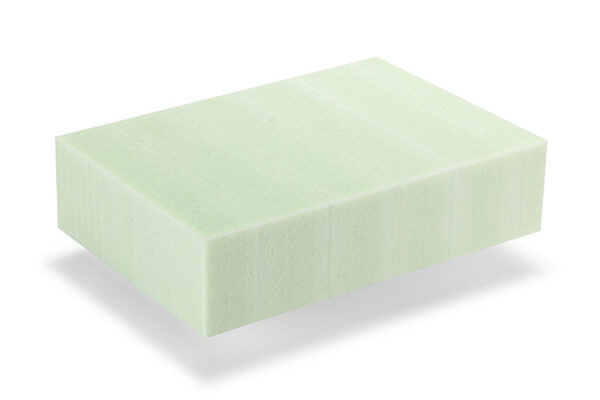
- Hot-press Laminating Process: PET foam sheets (density 80–135 kg/m³) are sandwiched between FRP, aluminum sheets, or carbon fiber skins. Bonded with epoxy adhesive film, they undergo hot pressing at 120°C and 0.5 MPa for 15–30 minutes. The finished product achieves peel strength >6 MPa with robust interlayer bonding, suitable for high-stress sidewalls.
- Thermoforming Technology: Preheated panels (160°C) are rapidly molded under pressure for 30 seconds, achieving minimum radii R=50 mm. This process perfectly adapts to the streamlined side panels and roofs of recreational vehicles. Post-forming dimensional stability is high, with shrinkage <0.3%.
- Prepreg Composite Reinforcement: PET surfaces are pre-coated with epoxy prepreg. Post-curing, interlaminar shear strength increases by 25%, significantly enhancing impact resistance.
Why is PET foam core better than PVC foam?
PET has the advantage of high performance, better heat resistance, does not release hydrogen chloride in the production process, and is 100% recyclable. PVC is easy to cause white pollution, while PET is more environmentally friendly.
PET has high tensile and compressive strength and very low water absorption (<1%).
| Property | PET (100 kg/m³) | PVC (80 kg/m³) |
|---|---|---|
| Compressive Strength | 1.8 MPa | 1.4 MPa |
| Shear Strength | 1.3 MPa | 1.2 MPa |
| Max Processing Temp | 150°C | 80°C |
| Water Absorption | <1% | <2% |
| Recyclability | 100% | No |
Parameters of PET foam core
| Parameter | Typical Values | Notes |
| Physical Properties | ||
| Density | 30–150 kg/m³ | Lower density for lightweight applications; higher density for strength. |
| Water Absorption | <1% (volumetric) | Low moisture uptake ensures dimensional stability in humid environments. |
| Mechanical Properties | ||
| Tensile Strength | 30–60 MPa | High-grade variants exceed 60 MPa for structural applications. |
| Compressive Strength | 10–30 MPa | Density-dependent; higher values for load-bearing components. |
| Shear Strength | 10–20 MPa | Resists deformation under lateral forces. |
| Elastic Modulus | 1,000–3,000 MPa | Stiffness varies with density and cell structure. |
| Thermal Properties | ||
| Heat Deflection Temp. | 70–80°C (standard), up to 120°C (modified) | Maintains shape under heat; modified grades for high-temperature use. |
| Thermal Conductivity | 0.03–0.04 W/(m·K) | Good thermal insulation for energy-efficient applications. |
| Chemical Resistance | ||
| Acid/Alkali Resistance | Resistant to dilute solutions | Performance varies with chemical concentration and exposure time. |
| Solvent Resistance | Moderate resistance | Sensitive to strong solvents like acetone or benzene. |
| Other Properties | ||
| Cell Structure | Closed-cell, uniform 0.1–1 mm | Homogeneous structure ensures consistent mechanical performance. |
| Flame Retardancy | Oxygen Index 26–30% | Classified as “difficult to ignite” with UL 94 HB or V-0 ratings. |
Related Post

Related Product

Author introduction

Hello, customers
My name is Jack Yu and I am the Business Manager of Composite Box. I have been in the business of sandwich panels, refrigerated trucks and RVs for more than 10 years. Please feel free to contact us. I am happy to provide you with the best service and products.
Email: info@composite-box.com





 English
 French
 German
 Japanese
 Korean
 Russian
 Polish
 Spanish