
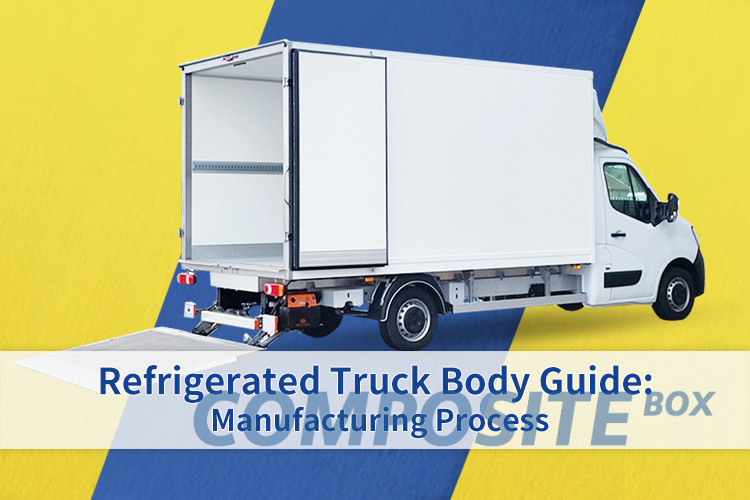
Refrigerated Truck Body Guide: Manufacturing Process
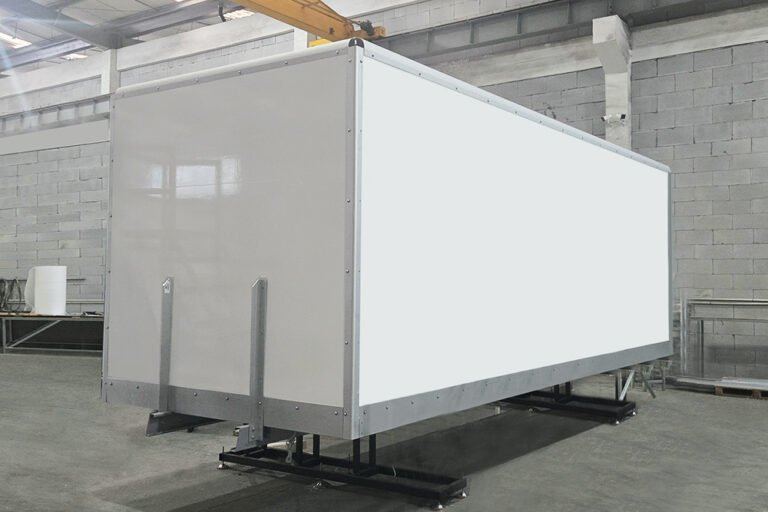
The refrigerated truck body has excellent thermal insulation performance. It is made of fiberglass, continuous fibers, and insulating foam. It is assembled using an aluminum profile frame. The refrigerated truck body consists of six composite panels, a floor, and a rear door. The composite panels are assembled as easily as building blocks. A refrigerated truck body can be manufactured and installed in just three hours by following the correct process.

What is a refrigerated truck body?
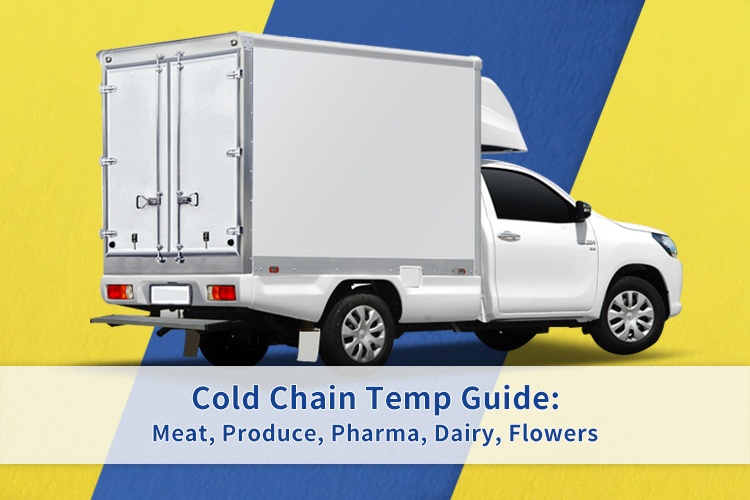
Refrigerated truck bodies are made for cold chain transport. They work on box trucks, semi-trailers, and trailers. Any product or food requiring low-temperature transport relies on refrigerated trucks for transportation. Refrigerated compartments are typically categorized by temperature zones: refrigerated (0–+8°C), frozen (around -18°C), and deep-freeze (below -25°C). They are commonly used to transport fresh produce, cold-chain goods for e-commerce, pharmaceuticals, vaccines, and other sensitive items. Compliance with international cold chain standards like ATP or local regulations is recommended.
Composite Box refrigerated vehicles use strong fiberglass and special insulating foams like polyurethane and XPS foam. These refrigerated vehicles have great thermal insulation and low thermal conductivity. This lowers energy use for refrigeration units and keeps internal temperatures stable. Composite Box offers lightweight refrigerated body solutions. Their products range in length from 2.5 meters to 12 meters.
What parts are required to manufacture a refrigerated truck body?
Making a refrigerated truck body requires several parts. These mainly include body panels and accessories.
In addition to the body panels, the following parts are required: subframe, door frames, door locks, refrigeration unit, bumpers, side protection devices, LED lights, aluminum trim, chassis frame, tailgate, roll-up door, and seals.
Internal components include E-shaped rails and kick plates.
The subframe securely anchors the cargo compartment to the chassis and bears the load of the cargo.
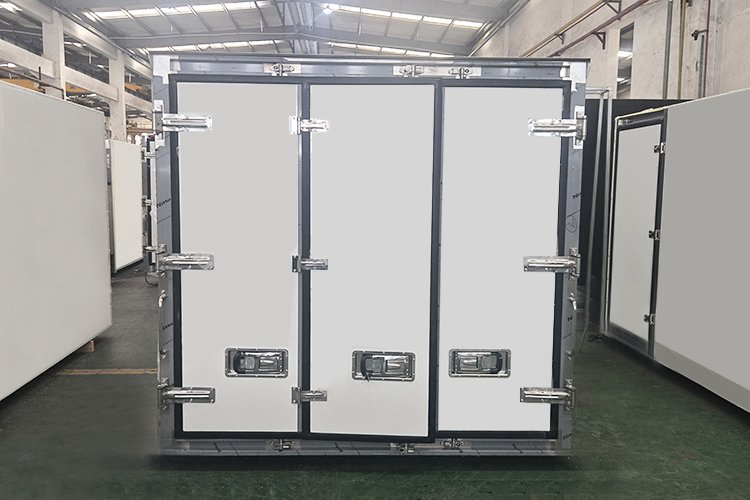
Door frames, door locks, and seals collectively ensure the airtight integrity of the cargo compartment.
The refrigeration unit provides stable cooling capacity and maintains the set temperature.
Side guards and bumpers enhance driving safety.
E-shaped rails facilitate cargo securing, preventing shifting during transport.
Production process of refrigerated truck bodies:
The production of refrigerated trucks involves multiple steps, including communicating with customers, understanding their needs, and providing technical support. After production and assembly, the refrigerated truck body is finally completed. In order to ensure the quality of the refrigerated truck body, the following steps are taken.
- Material selection: XPS and PU foam are used for the insulation of refrigerated trucks. The appropriate thickness and density of the film is selected based on the actual insulation performance required. The structure of the material is then designed. While considering insulation, other factors must also be taken into account.
- Design Phase: After our sales team confirms the customer’s requirements, engineers design the structure, which is then finalized by the customer. This step is critical to ensure that insulation performance and quality standards are met. Every detail must be meticulously designed by experienced engineers.
- Manufacturing Phase: Based on specific parameters and drawings, high-precision panels are produced, cut, bonded, and assembled. This step involves composite panel assembly using various production equipment.
- Installation work: Assembling the refrigerated truck body is a relatively straightforward process. Many potential challenges are already addressed during the design phase. The base panel is installed first, followed by other panels. We employ the latest rivet-free design technology. After the body is assembled, additional components are installed until the entire system is fully operational.
- During the quality inspection and acceptance phase, we must conduct random tests. These will check foam density, flatness, and bond strength of composite panels. The vehicle’s thermal conductivity will be tested with infrared or thermal insulation methods.
- Tests will check door airtightness, body leakage points, and the cooling rate of the refrigeration system. This ensures the vehicle meets cold chain operational needs when it leaves the factory.
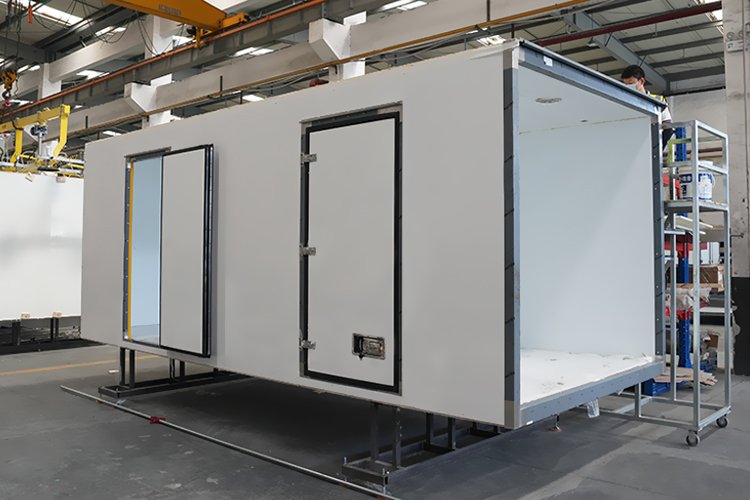
Structural Composition of Refrigerated Truck Body Panels
- Outer Skin: Made from yacht-grade fiberglass-reinforced plastic (FRP/GRP), featuring high gloss, UV resistance, and corrosion resistance. Thickness: 0.6–1.5 mm. Low thermal conductivity reduces heat transfer and enhances insulation efficiency.
- Core Material: Polyurethane (PU) or extruded polystyrene (XPS) foam. PU density: 45-50 kg/m³, thermal conductivity: 0.021-0.023 W/m·K, suitable for -45°C to +20°C; XPS is lightweight with low water absorption (0.9%). Thickness: 70-150 mm, customizable according to requirements.
- Inner lining: Four-layer continuous fiber composite material, slip-resistant and waterproof, thickness 0.6-1.2 mm. Smooth surface, easy to clean, reduces cargo damage.
- Connection layer: Non-woven fabric or adhesive, enhances bonding between core material and lining, prevents delamination.
- Embedded components: Aluminum alloy or stainless steel, used for installing E-track, refrigeration units, enhancing functionality and stability.
Smart Temperature Control Equipment
Modern refrigerated trucks need a temperature control system for stable operation. This system is key to keeping the right conditions. The smart temperature control system allows for multi-point monitoring. You can view it remotely and get over-temperature alerts. It also records detailed temperature data during the journey. This provides essential evidence for cold chain traceability and compliance inspections. It also adjusts the compressor’s mode based on temperature changes in the cargo area. This helps reduce energy use. With LED lighting and smartly placed E-track rails, it boosts loading and unloading efficiency. It also improves safety during nighttime operations.
Key Technologies in Refrigerated Truck Body Design
Refrigerated truck body design must balance thermal insulation, lightweight construction, and durability to ensure efficient and safe cold chain transportation. Core technologies include the following:
- Selecting high-performance insulation materials, such as PU foam or XPS foam, and precisely calculating thickness and density to optimize thermal conductivity, maintain stable low temperatures within the cargo compartment, and reduce refrigeration energy consumption.
- Rivetless design is a key innovation, using high-strength adhesive technology to assemble composite panels, simplifying the assembly process, enhancing sealing performance, and preventing cold air leakage.
- Structural design focuses on lightweight construction, utilizing fiberglass and aluminum profiles for the frame to reduce vehicle weight while ensuring structural strength and extending service life.
- Accessory design, such as LED lights, E-track systems, and intelligent temperature control systems, enhances functionality and convenience, meeting customized requirements.
- Engineers collaborate with clients through precise modeling to ensure designs meet transportation requirements while balancing cost and efficiency.
- The aforementioned technologies result in superior performance for refrigerated truck bodies.
Recommended Refrigerated Body Manufacturers
Composite Box is a renowned manufacturer of refrigerated bodies. We specialize in providing fiberglass polyurethane composite materials. These enhance refrigerated truck performance, delivering exceptional thermal insulation and high strength. They accommodate a wide range of usage scenarios and applications. They are the latest composite sandwich structure. They lighten the load on refrigeration units, cut energy use, and boost the lifespan of these systems.
Composite Box offers refrigerated bodies ranging from 3 to 11 meters in length. These are compatible with common trucks, trailers, and semi-trailers, fitting most cargo compartments. They meet diverse requirements for insulation, refrigeration, and freezing. The bodies are easy to clean and resistant to corrosion. They accommodate various door configurations and floor types. Custom special features can be integrated based on specific operational needs.
The Importance of Polyurethane Foam in Truck Assembly Units
Polyurethane foam is mainly used in fiberglass sandwich panels. It’s essential for making modern truck refrigerated bodies. It reduces overall vehicle weight while offering robust compressive strength, ranging from 100 to 300 kPa. Its thermal insulation properties surpass those of XPS foam. Its thermal conductivity ranges from approximately 0.022 to 0.030 W/(m·K). Rigid polyurethane foam typically has a density of about 35–60 kg/m³. It is a highly effective material.
Author introduction

Hello, customers
My name is Jack Yu and I am the Business Manager of Composite Box. I have been in the business of sandwich panels, refrigerated trucks and RVs for more than 10 years. Please feel free to contact us. I am happy to provide you with the best service and products.
Email: info@composite-box.com | Tel: 86+17280837525








 English
 French
 German
 Japanese
 Korean
 Russian
 Polish
 Spanish