

Lightweight Solutions for Refrigerated Truck Rear and Side Doors
The Importance of Lightweight Rear and Side Doors
In traditional refrigerated vehicle designs, all-steel construction is commonly employed, resulting in exceptionally heavy structures. A standard-sized rear door alone can weigh up to 150 kilograms, and when combined with the weight of the side doors, the total weight can exceed 200 kilograms. This not only directly reduces the vehicle’s payload capacity but also increases fuel consumption, significantly driving up operational costs.

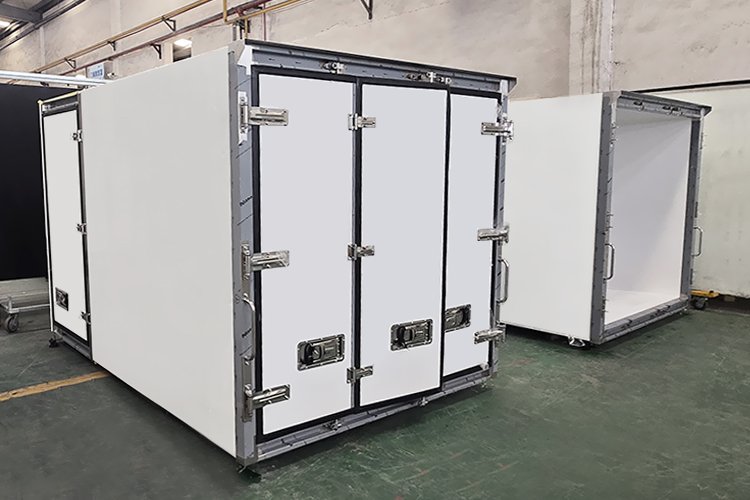
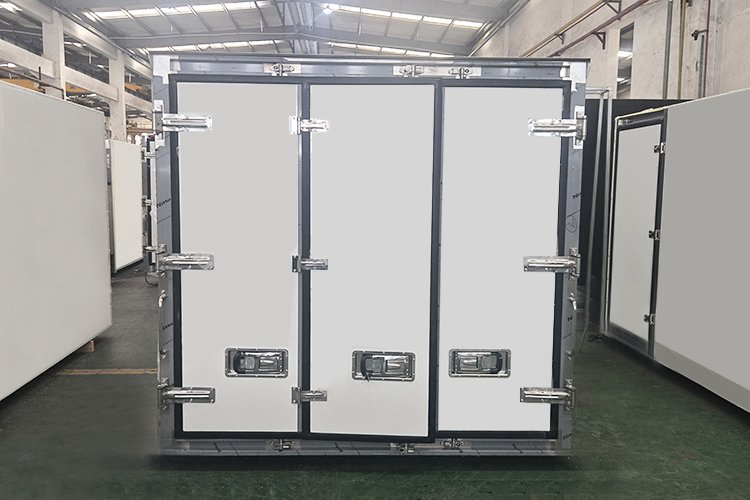
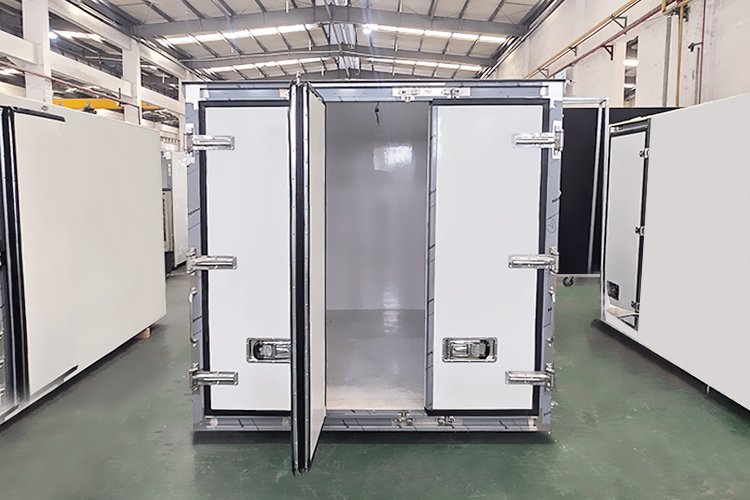
Composite Box Develops Effective Lightweighting Solutions
Through years of research, Composite Box has discovered that reducing the weight of refrigerated truck doors is not simply a matter of material substitution. Our goal extends beyond merely lowering self-weight; we also ensure and enhance critical performance characteristics such as thermal insulation, sealing integrity, and impact resistance. We guarantee that while weight is reduced, performance across all aspects remains unchanged.
To achieve this objective, Composite Box has established three core principles:
- Structural Optimization
- Material Innovation
- Process Advancement.
Detailed Lightweight Solution:
The Composite Box employs a proven lightweight composite solution: a composite structure comprising FRP skin, insulating foam core, and internal steel reinforcement. Each of these three layers offers distinct characteristics:
FRP (Fiber-Reinforced Plastic) Skin: Replaces traditional steel panels with superior impact resistance and scratch resistance.

High-Efficiency Insulation Core: Filled with polyurethane or XPS rigid foam. These materials possess extremely low thermal conductivity, serving as highly effective insulators that significantly reduce the door’s overall U-value.

High-Strength Frame: An integrated reinforced steel skeleton provides core structural support, ensuring reliable impact resistance and durability even under frequent operation and self-weight load.

What components are used in the lightweight rear door?
For components, we adhere to the principles of lightweighting and durability, selecting industry-leading designs and materials.
Lifting System
Traditionally using cast iron lifting systems, we now employ high-strength aluminum alloy locking rods, significantly reducing weight.
Hinge System
Features lightweight bolts/rivets and weight-reducing shims. Composite material bushings partially replace full-metal bearings.

Sealing Components
- Seal Strip: Utilizes durable, aging-resistant, and elastic TPE material for lower density and superior flexibility.
- Magnetic Sealing Strip: Incorporates flexible magnetic strips that magnetically assist door frame adhesion, enhancing sealing effectiveness while reducing closing resistance.
Lightweight Components
Inner lining panels, bumper bars, and lighting systems all adopt the latest design principles, prioritizing lightweight construction and durability.
Benefits of Using Lightweight Rear Doors
Enhanced Economic Efficiency:
Lightweight door bodies reduce weight by 50%, increasing cargo capacity and boosting revenue. Weight reduction also lowers fuel consumption.
Enhanced Operational Efficiency:
Lightweight side and rear doors facilitate smoother opening/closing, saving time. With over 20 cycles daily, this saves half an hour, increasing operational time.
Improved Insulation Performance:
Internal polyurethane foam insulation effectively blocks cold air leakage, reducing refrigeration unit power consumption.




 English
 French
 German
 Japanese
 Korean
 Russian
 Polish
 Spanish