
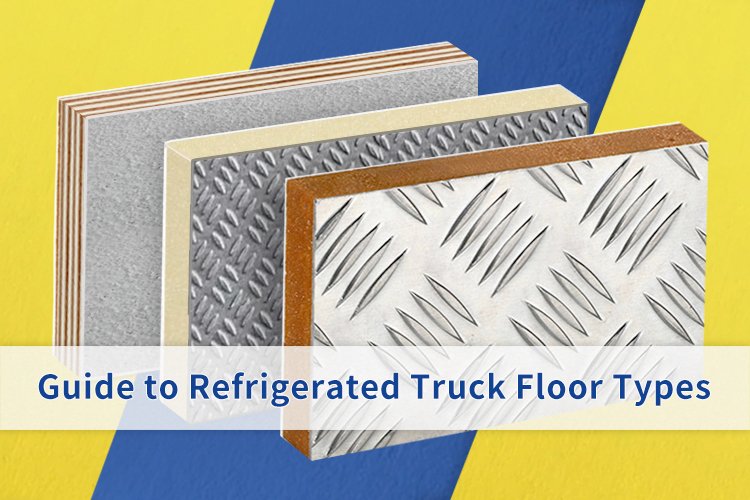
Guide to Refrigerated Truck Floor Types
Refrigerated trucks, trailers, and containers are indispensable for cold chain logistics. Their insulation performance directly impacts cargo quality and safety.
In cold chain transportation design, selecting the right floor type is critical. An appropriate floor must effectively block heat transfer, maintain stable interior temperatures, and possess high load-bearing capacity, slip resistance, corrosion resistance, ease of cleaning, and durability.
Different flooring types exhibit significant variations in thermal conductivity, weight, cost, and suitability for specific applications. Incorrect selection may lead to increased energy consumption, cargo damage, or higher operational costs.
This article systematically examines the materials, advantages, disadvantages, and primary applications of mainstream refrigerated truck flooring, helping you make informed decisions based on cargo characteristics, operational environments, and budget constraints.
Anti-Slip Diamond-Pattern Aluminum Alloy Flooring
Constructed from aluminum alloy with embossed diamond-pattern anti-slip texture, this is a common flooring type in refrigerated transport.
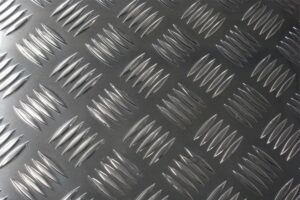
Material: Primarily made from high-strength aluminum alloy profiles or sheets with anti-slip surface treatment.
Advantages:
Lightweight, effectively reducing vehicle weight; Excellent anti-slip performance ensuring operational safety; Corrosion-resistant, easy to clean and maintain; High strength with strong load-bearing capacity.
Disadvantages:
Relatively higher initial purchase cost; Softer aluminum alloy material may develop dents under prolonged heavy loads or impacts from sharp cargo; Slightly inferior thermal insulation compared to non-metallic flooring.
Primary Applications:
Widely used within general cargo and cold chain transportation, particularly suited for weight-sensitive applications requiring frequent cleaning, such as urban refrigerated delivery trucks and fresh produce transport vehicles.
Rectangular Duct Floor
A floor specifically designed for powerful cold air circulation, featuring regular rectangular protrusions on its surface that form ventilation ducts.
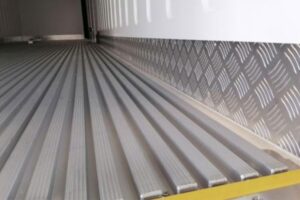
Material:
Typically made of aluminum alloy or galvanized steel plate, offering high structural strength.
Advantages:
The unique duct structure ensures even cold air flow beneath cargo, eliminating refrigeration dead zones; promotes consistent temperature throughout the cargo compartment; the space beneath the floor facilitates cleaning.
Disadvantages:
Relatively complex structure with higher manufacturing costs; grooves may accumulate debris requiring thorough periodic cleaning; uneven surface may slightly impact certain palletized cargo transport.
Primary Applications:
Primarily used for transporting goods requiring extremely high temperature uniformity, such as premium fruits, flowers, vaccines, and biological agents.
Stainless Steel Flooring
Flooring crafted from stainless steel, renowned for its exceptional durability and corrosion resistance.
Material:
Primarily 304 or 316 grade stainless steel, offering outstanding corrosion resistance.
Advantages:
Extremely high strength with superior wear and impact resistance; exceptional corrosion resistance against acids, alkalis, and saltwater; easy to clean and disinfect, ensuring high hygiene standards; long service life.
Disadvantages:
Significant self-weight substantially increases vehicle tare weight; highest cost among all flooring types; slippery surface typically requiring additional anti-slip texturing; poor thermal insulation necessitating high-quality insulation layers.
Primary Applications:
Suitable for environments with extreme hygiene requirements or corrosive conditions, such as chemical product cold chains, fishery transportation, high-end food ingredient handling, or pharmaceutical industry transport.
T-Shaped Flooring
The flooring features a T-shaped cross-section, assembled via mortise-and-tenon joints to form a sturdy, level load-bearing surface.
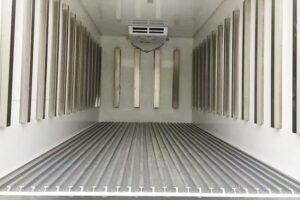
Materials:
Commonly made from extruded aluminum alloy profiles, though fiberglass-reinforced plastic (FRP) and other materials are also used.
Advantages:
The jointed structure offers high integrity, supporting heavy loads with even distribution; Seamless surface facilitates cargo movement and cleaning;
Excellent drainage, with some designs incorporating integrated drainage channels.
Disadvantages:
Demands high installation precision;
Poor sealing at joints may cause water ingress;
Aluminum alloy T-shaped flooring also presents higher costs and mediocre thermal insulation.
Primary Applications:
Suited for transporting heavy, uniformly packaged cargo. Commonly found in large refrigerated trailers, containers, and logistics scenarios requiring frequent forklift operations.
FRP Flooring (Fiber-Reinforced Plastic Flooring)
Manufactured from glass fiber-reinforced plastic, this composite flooring offers lightweight construction with high strength.

Material:
Composed of glass fiber reinforcement bonded with thermosetting resin as the matrix.
Advantages:
Exceptional corrosion resistance, unaffected by acids, alkalis, or seawater; lightweight with superior thermal insulation compared to metal flooring; excellent slip resistance with textured surfaces; non-static and non-absorbent.
Disadvantages:
May degrade with prolonged UV exposure; surface hardness inferior to metal, susceptible to damage from sharp or heavy objects; moderate fire resistance; more challenging to repair than metal.
Primary Applications:
Widely used in refrigerated transport for fisheries, chemical cold chains, and refrigerated transport equipment in any high-humidity or highly corrosive environment.
Laminate Flooring
Manufactured by laminating multiple layers of different materials to combine the advantages of various materials.

Construction:
Typically consists of a wear-resistant surface layer (e.g., resin), a high-strength core layer (wood, plastic, etc.), and a moisture-resistant backing layer.
Advantages:
Good thermal insulation; lightweight; moisture-resistant and corrosion-resistant with excellent stability; generally cost-effective; easy-to-clean surface.
Disadvantages:
Load-bearing capacity and wear resistance may be lower than high-end metal flooring; may delaminate under prolonged water exposure or extreme conditions; prone to damage if edges are improperly handled.
Primary Applications:
Suitable for cost-sensitive scenarios and non-extreme transportation environments, such as mixed dry/refrigerated cargo delivery and general food transportation.
Selecting the right floor for a refrigerated truck is a critical decision that impacts operational efficiency, cargo safety, and long-term costs. Here are the standout features of each floor type:
- Aluminum alloy floors: Lightweight and slip-resistant
- Rectangular duct floors: Expert at maintaining even temperature control
- Stainless steel floors: Indestructible
- T-shaped floors: Stable load-bearing capacity
- FRP floors: Corrosion-resistant
- Composite floors: Economical and practical
Summary
When making decisions, be sure to comprehensively consider your primary cargo types (such as whether strong ventilation is required or if the cargo is corrosive), operational frequency and intensity, hygiene requirements, and total lifecycle costs. When necessary, consult professional trailer manufacturers and conduct on-site inspections of different flooring options. This will safeguard your cold chain transportation and establish a solid, reliable foundation.



 English
 French
 German
 Japanese
 Korean
 Russian
 Polish
 Spanish