
Commercial Roll-Up Door Size Selection Guide
Roll-up doors, as a common architectural entrance solution, are widely used in commercial, residential, and industrial settings. Different application scenarios demand varying dimensions for roll-up doors. Therefore, understanding their specifications, material properties, and installation procedures is crucial for achieving safe, practical, and aesthetically pleasing performance. This article focuses on common dimensions and selection criteria for commercial roll-up doors for your reference.
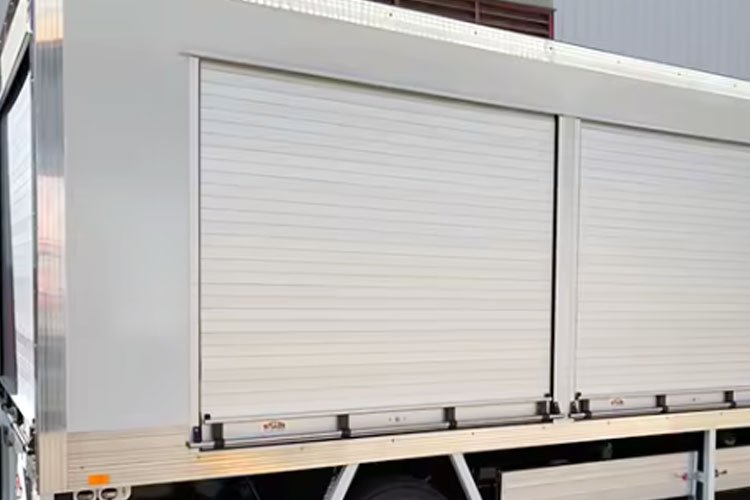
Roll-up door dimensions primarily include width (W), height (H), and slat thickness. These dimensions are determined based on the door opening size, which is measured as follows:
·Opening width: The clear distance between the left and right sides of the wall opening.
·Opening height: The clear height from the floor level to the top edge of the opening.
Note that the actual manufacturing dimensions of a roll-up door exceed the door opening size, requiring installation clearance. Accurate door opening dimensions are the primary prerequisite for selecting a roll-up door.
Width (W)
Roll-up door curtain width = Clear opening width W + Required side overlap
Height (H)
Roll-up door curtain height = Clear opening height H + Required headroom
Typically, curtain width = Opening width + 50-100mm allowance on each side (total increase of 100-200mm). Curtain height = Opening height + Coil space above (typically 400-600mm).
Common commercial roll-up door dimensions range from 2.5-8 meters in width and 2.5-6 meters in height, with maximum customizable sizes up to 12 meters wide and 10 meters high. Roll-up doors are categorized by function into standard, wind-resistant, fire-rated, high-speed, and other types. This article will now detail size selection for roll-up doors under various conditions based on specific applications.
Standard Roll-Up Doors
Standard roll-up doors are the most common type, primarily used in retail shops, garages, and small warehouses to provide basic security and privacy. Their width typically ranges from 2 to 6 meters, with heights between 2 and 3 meters.
Wind-Resistant Roll-Up Doors
Designed for coastal typhoon zones and inland areas prone to sandstorms, wind-resistant roll-up doors offer enhanced wind pressure resistance. They are mainly used in large warehouses and industrial facilities. They effectively withstand strong winds, preventing door deformation and damage. Wind-resistant roll-up doors share similar size ranges with standard models, though maximum dimensions are strictly limited by wind pressure ratings. Widths generally do not exceed 6 meters, and heights do not exceed 5 meters. Larger sizes demand higher structural strength in door curtain materials, guide rails, and rollers.
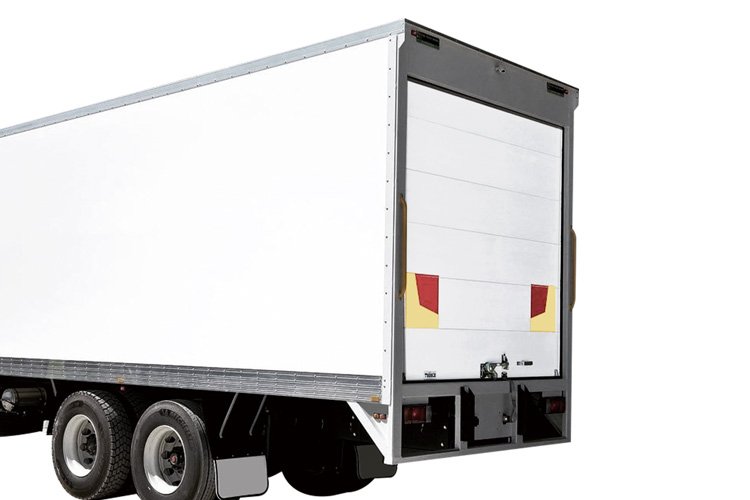
Fire-rated roll-up door
Fire-rated roll-up doors are widely used in fire compartmentation zones of industrial and civil buildings. They effectively prevent the spread of fire, safeguarding lives and property. Typically constructed from steel plates or other metal sheets, these doors are normally rolled up within a shaft housing above door or window openings. In the event of a fire, they are lowered and deployed to block the spread of flames through door or window openings. The dimensions of fire-rated roll-up doors must strictly comply with the national standard GB 14102 and shall not be altered arbitrarily.
High-Speed Roll-Up Door
A high-speed roll-up door refers to a door operating at speeds exceeding 0.6 meters per second. Its core value lies in rapid isolation, thereby ensuring the quality grade of production facilities. It offers multiple functions including thermal insulation, cold preservation, insect prevention, wind resistance, dustproofing, and sound insulation. It is widely used in locations demanding high passage efficiency and sealing requirements, such as food processing, chemical plants, textile factories, and cold storage facilities. To maintain stability and efficiency during rapid operation, maximum dimensions are limited. Common specifications typically cap width at 6 meters and height at 6 meters.
In summary, the size of a roll-up door must be selected based on a comprehensive consideration of the actual application scenario, functional requirements, and installation conditions. In practical applications, the appropriate dimensions should be determined according to the specific context, functional needs, and installation environment.
Author introduction

Hello, customers
My name is Jack Yu and I am the Business Manager of Composite Box. I have been in the business of sandwich panels, refrigerated trucks and RVs for more than 10 years. Please feel free to contact us. I am happy to provide you with the best service and products.
Email: info@composite-box.com | Tel: 86+17280837525




 English
 French
 German
 Japanese
 Korean
 Russian
 Polish
 Spanish