
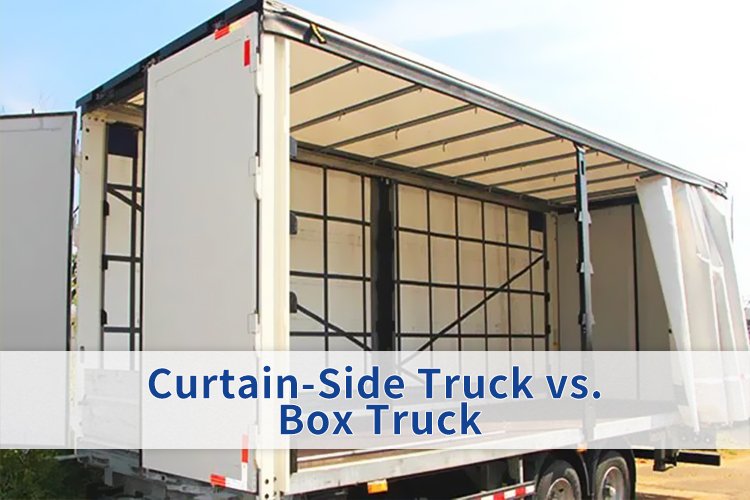
Ciężarówka z bocznymi kurtynami a ciężarówka z zabudową skrzyniową: która z nich jest lepsza dla Twojej firmy?
Choosing between a curtain-side truck and a box truck is an important decision for businesses involved in freight transportation and logistics. Although both are designed to transport goods efficiently, they differ significantly in loading flexibility, cargo protection, payload capacity, and operating costs. Understanding these differences can help businesses select the right truck body for their transportation needs, improve operational efficiency, and reduce long-term costs.
Loading and unloading efficiency
· Comparison of Loading and Unloading Methods
Curtain-sided vehicles do not have conventional doors; instead, they use sliding curtains as enclosures. This allows for cargo to be loaded or unloaded from the sides, the rear, or both simultaneously, significantly enhancing operational flexibility. Such a design is particularly well-suited for forklift operations, palletized cargo, and sites where access to the rear of the vehicle is restricted.
In contrast, box trucks feature a more enclosed cargo space. However, they are typically limited to rear-door loading and unloading, which offers less flexibility in scenarios that require frequent cargo handling.
· Compatibility with loading/unloading platforms
Box trucks are generally well-suited for standard loading docks, as their rear doors can align with the dock opening, allowing forklifts to move palletized cargo directly between the warehouse and the vehicle’s interior.
While curtain-sided trucks can also utilize rear loading docks, their primary advantage lies in side loading and unloading. Equipped with an appropriate sliding curtain system, they allow forklifts to access the cargo space from the side of the vehicle. Such vehicles are an ideal choice for facilities that feature side-loading docks or have multiple loading bays.
Cargo Protection and Weather Resistance
· Windproof and dustproof performance
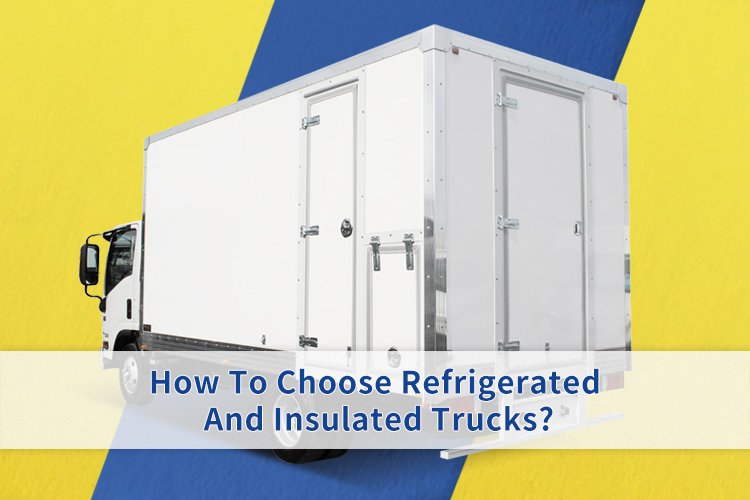
Due to their enclosed design, box trucks generally offer superior protection against wind and dust. They effectively block out windblown dust and road debris, making them well-suited for transporting cargo that requires a high degree of cleanliness and containment.
In contrast, curtain-sided trucks utilize flexible curtains that provide only basic protection against wind and dust, and are therefore inadequate for environments with high levels of wind or dust.
For sensitive cargo, a box truck with a high level of airtightness is typically the better choice.
Load Capacity and Transport Efficiency
· Comparison of cargo space utilization
Both curtain-sided trailers and box trucks allow for efficient use of cargo space, though their respective designs offer different advantages.
Curtain-sided vehicles facilitate loading and unloading from the sides, making it easier to position pallets, handle oversized items, and maximize the use of available space. This flexible access helps minimize wasted space that might otherwise result from loading constraints.
Box trucks, by contrast, feature a fixed, enclosed cargo body with defined dimensions—ideal for transporting standardized pallets or packaged goods, and well-suited for structured delivery routes. However, elements such as wheel arches, door openings, and internal structural components can affect the actual usable space.
· Lightweight design
Generally speaking, curtain-side trucks are lighter because they eliminate the rigid panel on one side. However, the weight of traditional box trucks can also be significantly reduced through the use of lightweight composite panels and optimized structural design. For businesses aiming to maximize payload capacity and fuel efficiency, curtain-side trucks may offer a distinct advantage; meanwhile, lightweight box trucks provide an effective balance between vehicle curb weight, cargo protection, and operational flexibility.
Operations and maintenance costs
· Initial purchase and customization costs
Curtain-side trucks often require a higher initial investment due to their specialized side curtains, sliding rail systems, and supporting structures. Box trucks typically feature a simpler, enclosed cargo body design, though their costs can vary based on factors such as thermal insulation, door configurations, safety requirements, and the dimensions of the cargo box. For both vehicle types, the inclusion of customized features will increase the initial investment.
· Maintenance of curtain-side systems vs. maintenance costs for box-type bodies
Curtain-sided trucks require regular inspection of their side curtains, rollers, rails, fasteners, tensioning devices, and anchor points. During operation, the side curtains may develop tears or signs of wear—particularly when subjected to frequent loading and unloading, or prolonged exposure to harsh weather conditions.
Box trucks generally require less maintenance for their cargo-access systems; however, components such as hinges, door seals, locking mechanisms, and rigid body panels can still experience wear or damage. Furthermore, depending on the specific design, repairing these rigid panels or doors can be a more complex process.
Curtain-Sided Trucks vs. Box Trucks: Comparison Table
| Comparison Factor | Curtain-Side Truck Body | Box Truck Body |
|---|---|---|
| Struktura ciała | Flexible side curtains supported by a frame | Rigid, fully enclosed body |
| Loading and Unloading | Side and rear access, depending on configuration | Primarily rear access |
| Loading Dock Compatibility | Suitable for rear docks and side-loading areas | Well suited to standard rear loading docks |
| Cargo Protection | Protects against ordinary weather; performance depends on curtain sealing | Generally offers better protection against wind, dust, and road debris |
| Cargo Security | Curtains can be opened easily, requiring additional security measures | Rigid walls and lockable doors generally provide better security |
| Space Utilization | Flexible side access simplifies loading bulky goods and pallets | Fixed enclosed space supports organized cargo storage |
| Ładowność | Often benefits from lower truck body weight | May be heavier, depending on truck body construction |
| Koszty operacyjne | May reduce loading time for suitable operations | Can be efficient for regular delivery routes and enclosed cargo transport |
| Konserwacja | Requires inspection of curtains, rails, rollers, and tensioning systems | Requires inspection of doors, hinges, seals, locks, and truck body panels |
| Typowe zastosowania | Palletized freight, industrial goods, and flexible loading operations | Urban deliveries, packaged goods, furniture, and cargo requiring an enclosed space |
| Best Choice For | Businesses prioritizing flexible loading access and operational efficiency | Businesses prioritizing enclosed cargo protection and rear-dock compatibility |
Conclusion: Which Truck Body Is Better for Your Business?
Curtain-side trucks and box trucks each offer distinct advantages for commercial transportation. Curtain-side trucks provide flexible loading access, faster cargo handling, and convenient transportation of palletized or oversized goods. Box trucks offer better enclosed cargo protection, enhanced security, and suitability for businesses handling packaged goods or operating regular delivery routes.
The right choice depends on your cargo requirements, loading methods, operating conditions, payload targets, and budget. If you are looking for a customized truck body solution, Composite-Box can help you explore suitable designs and configurations. Contact us to discuss your commercial vehicle body requirements and OEM manufacturing needs.
 English
 French
 German
 Japanese
 Korean
 Russian
 Polish
 Spanish